

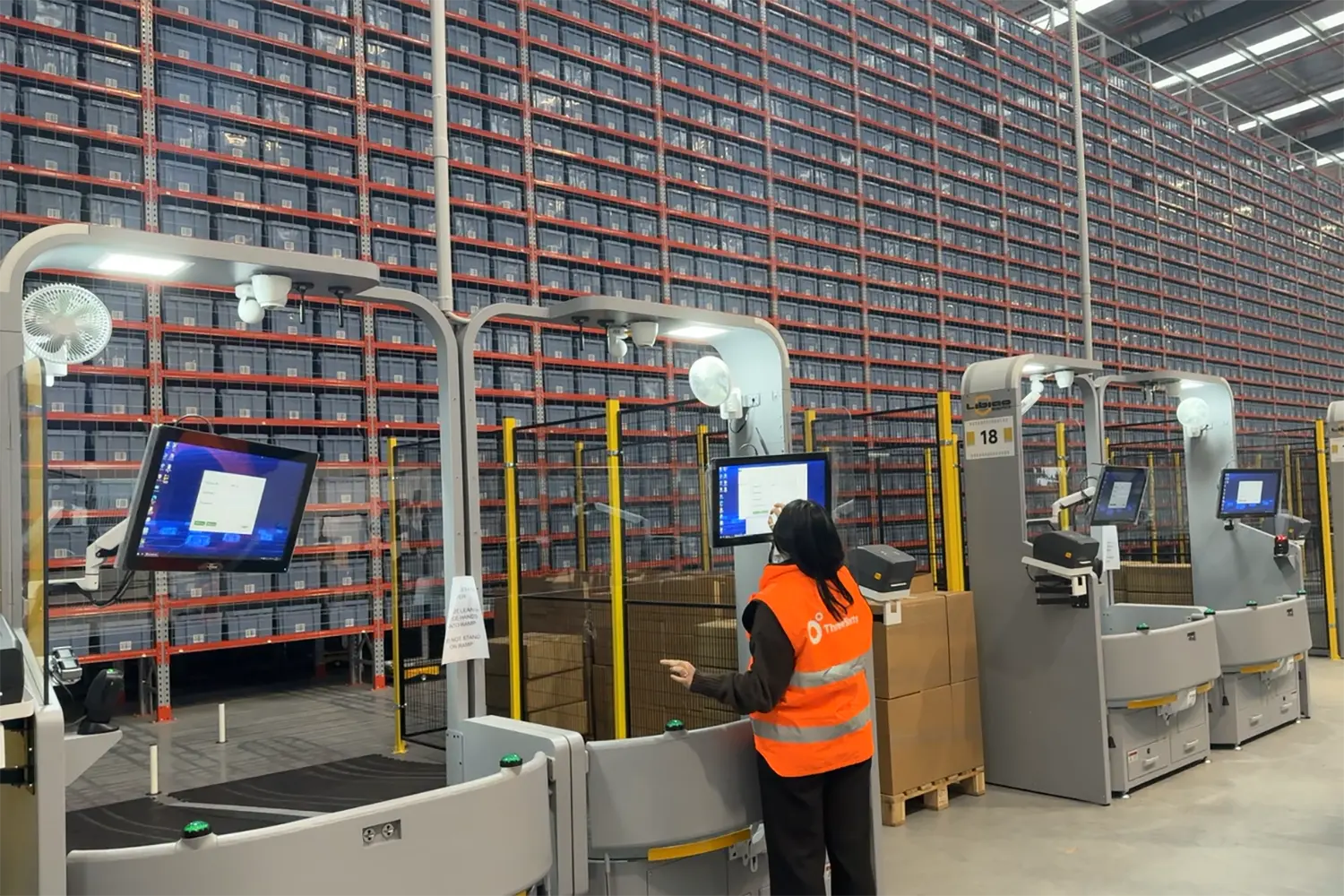
A retailer invests millions in a highly automated distribution centre. The picking engine is efficient; the robots work without any glitches, and yet within weeks of go-live, a bottleneck has formed. Not inside the automation, but on either side of it. The inbound decant process and the post-pick packing area weren’t redesigned to match the speed of the new system. The business optimised one node to create pressure points in others.
This is a scenario that Rob Charles, ThreeSixty Chief Operating Officer, and Derek Tan, ThreeSixty’s Executive Director, have observed as Australia’s automation market grows.
The operation doesn’t begin or end at the pick module. Inbound conveyors, decant processes, packing, value-added services, returns all sit outside the automation and each will feel the impact of what the pick engine produces. When those surrounding processes aren’t redesigned to match, the bottleneck doesn’t disappear. It relocates.
The common thread in the projects that go well, Rob and Derek say, is not the technology itself, it’s the preparation around it. From aligning stakeholders and redesigning processes to rethinking how the operation is run and who runs it, automation change management is about the people that sit behind the change just as much as the technology implementations.
Aligning the business before the project starts
Stakeholder alignment is one of the most frequently underestimated parts of an automation project – and one of the most consequential when it’s missing.
Derek says the conversation needs to extend well beyond the supply chain team to include store operations, inventory planning, merchandising and customer service. These are all teams whose day-to-day will be disrupted during the transition, often well before the benefits of the new system are realised.
“You need to be upfront,” he says. “If you’re moving from multiple sites to a consolidated automated DC, it is a step change. Everyone needs to be part of that journey because what we can’t always foresee is the wider impact it might create.”
That means having explicit conversations about service-level trade-offs before the transition starts. If next-day delivery becomes a 48-hour window for a period, is the business aligned with that? If ecommerce orders need to be slowed down and controlled during ramp-up, has everyone agreed to that approach?
“All parties need to agree on the trade-offs before the project starts,” Derek says. “If they don’t, they’re not ready to transition.”
The nature of those trade-offs varies by industry. An ecommerce business lives and dies by end-customer sentiment, especially now where a late delivery becomes a social media post, a complaint, a lost repeat customer. A bricks-and-mortar retailer is more focused on store service levels, shelf stock and replenishment reliability.
Once the business understands where the pressure will be felt and what trade-offs are necessary for the implementation of a new system, the planning gets specific. It might mean identifying a lower-volume regional store as a pilot, controlling the ramp on ecommerce orders rather than taking a big-bang approach, or agreeing upfront which service levels can flex and which can’t. These are decisions that need to be locked in before the project starts, not discussed once the pressure is on.
Building a new operating model, not transplanting the old one
An automated DC runs on completely different logic to a manual one, and the people running it need to understand that difference before the switch is flipped.
In a manual warehouse, when volume increases, the instinct is to add labour. In an automated environment, that doesn’t work. You cannot simply throw warm bodies at the problem because the levers are entirely different.
“The automation will do what it’s supposed to do,” Rob says. “The skill is maximising the output by understanding the right order pool, the right profile, and operating rhythm to optimise the processes. That requires a completely different skill set to running a manual warehouse.”
One of the most frequent pitfalls in automated fulfilment is loading the system with the wrong inventory mix—where non-moving stock consumes tote capacity and directly erodes the throughput the automation is designed to deliver.
Derek describes it as a supply chain within a supply chain. In an automated facility, internal flows become far more critical, similar to a manufacturing rhythm. The way orders are sequenced, how peaks are planned for, and how shift structures are designed needs to be rethought.
Getting the right people in early
This new way of working can’t be learned overnight. Rob says businesses often underestimate the change management and training that needs to be incorporated early in the process so that staff are part of the journey, not handed a system after go-live.
Planners, in particular, are a pressure point. Derek has seen operations go through multiple planners in a single week during transitions because the role demands a different way of thinking.
There is also a generational dimension. Automated DCs appeal to younger supply chain professionals drawn to the technology and the different skill sets it requires. That can be an advantage, bringing fresh perspectives into operations that have traditionally relied on experience with manual processes.
Derek’s approach is to identify people with the right disposition toward new ways of working and bring them into the project early, as subject matter experts involved in testing and refinement.
“Attitude covers 90 per cent of it,” Derek says. “Someone who is rigid in their ways is very hard to bring along, so identifying those who are excited and inquisitive about this change is important.”
Automation doesn’t deliver value on its own—how people operate and optimise the system is just as critical. Without the right skills and training, even the best technology will fall short of delivering the intended outcomes.